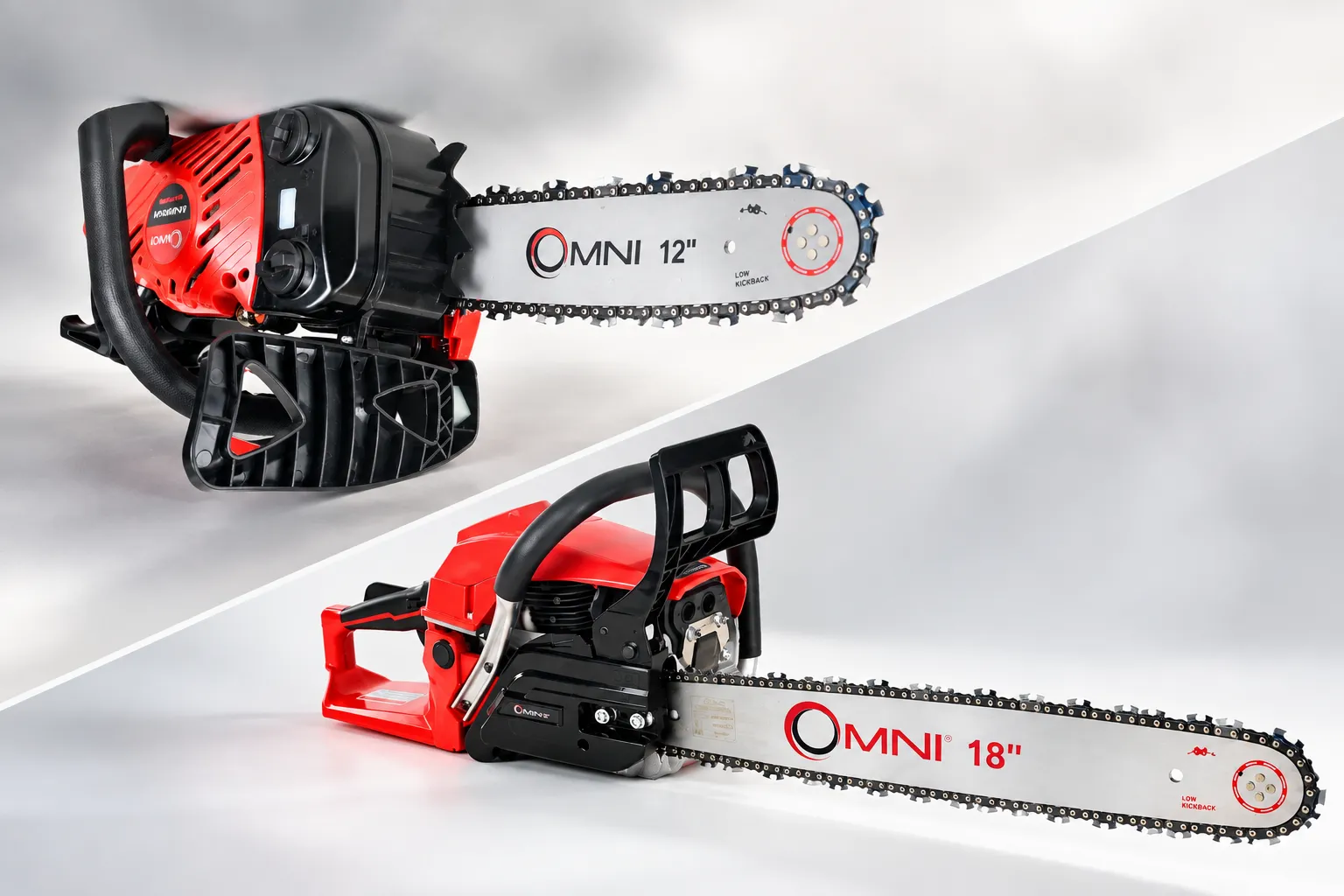

A 22-inch chainsaw bar looks impressive next to a 12-inch one.
But does that mean it has more cutting power?
Not necessarily.
The length of a chainsaw’s guide bar tells you more about how much material the saw can potentially cut in one pass than how powerful the chainsaw actually is. Engine or motor power, chain speed, chain condition and the compatibility between the saw, bar and chain all matter.
This distinction is important when choosing a chainsaw. A longer bar on an underpowered machine can actually make cutting harder rather than easier.
What Does Chainsaw Bar Length Mean?
The guide bar is the long metal rail around which the saw chain travels. Its stated length is generally the nominal cutting length, expressed in inches.
So:
- 12-inch bar → shorter cutting setup
- 16-inch bar → medium-length setup
- 18-inch bar → longer cutting reach
- 22-inch bar → designed for larger cutting applications
The actual suitable bar length depends on the chainsaw model, its power and the application. Manufacturers specify compatible cutting-equipment ranges rather than treating bar length as a universal upgrade.
Does a Longer Chainsaw Bar Mean More Power?
No.
This is probably the biggest misconception about chainsaw bar length.
A longer bar gives you more cutting reach and can accommodate larger cutting jobs. But the engine or motor is what supplies the power that drives the chain.
In fact, a longer bar can place greater demands on the machine. Husqvarna notes that engine power and guide-bar length need to be appropriately matched, while an undersized chainsaw working on larger material can experience unnecessary strain and wear.
Think about it this way:
Bar length determines reach. Power determines how effectively the machine can drive the chain through the material.
You need both to be properly matched.
When Does a Longer Bar Make Sense?
A longer bar becomes useful when you’re regularly working with larger logs, larger branches or thicker trees.
For example, Omni Green Solutions offers chainsaws with several bar configurations, including:
- Omni Chainsaw – 12 inch
- Omni Chainsaw – 18 inch
- Omni Pro Chainsaw – 18 inch
- Omni Pro Chainsaw – 22 inch
The standard 58cc Omni models listed by Omni have a 2.3 kW engine, while the Pro 18-inch and 22-inch models use a 62cc engine rated at 2.8 kW.
That illustrates an important point: the longer-bar models are not simply a longer piece of metal attached to the same setup. The saw’s power and cutting equipment need to work together.
12-Inch vs 18-Inch vs 22-Inch Chainsaw
So which size should you choose?
12-Inch Chainsaw
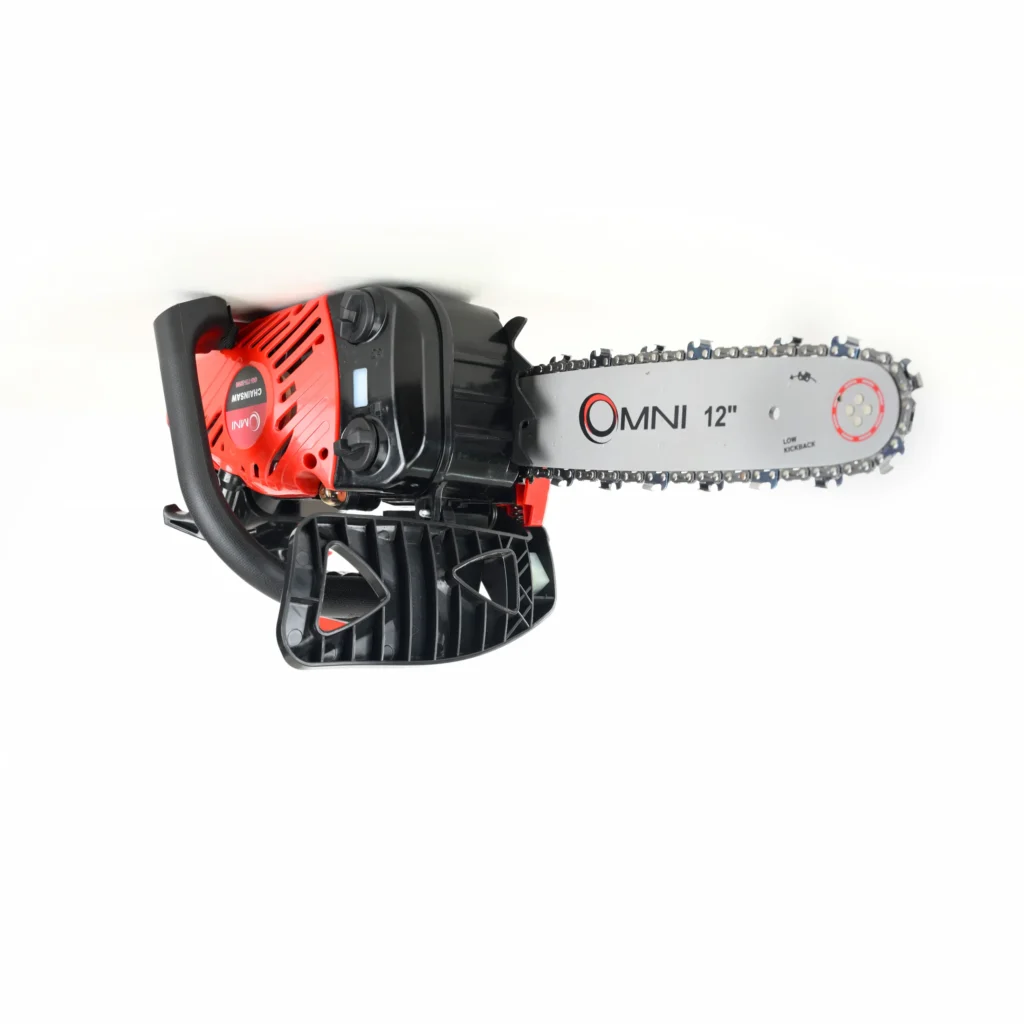
A shorter bar is easier to manoeuvre and can be useful for smaller cutting jobs and branches.
A shorter setup can also be more comfortable when precision and movement matter. Husqvarna similarly notes that shorter guide bars are lighter and easier to manoeuvre for tasks such as limbing.
18-Inch Chainsaw
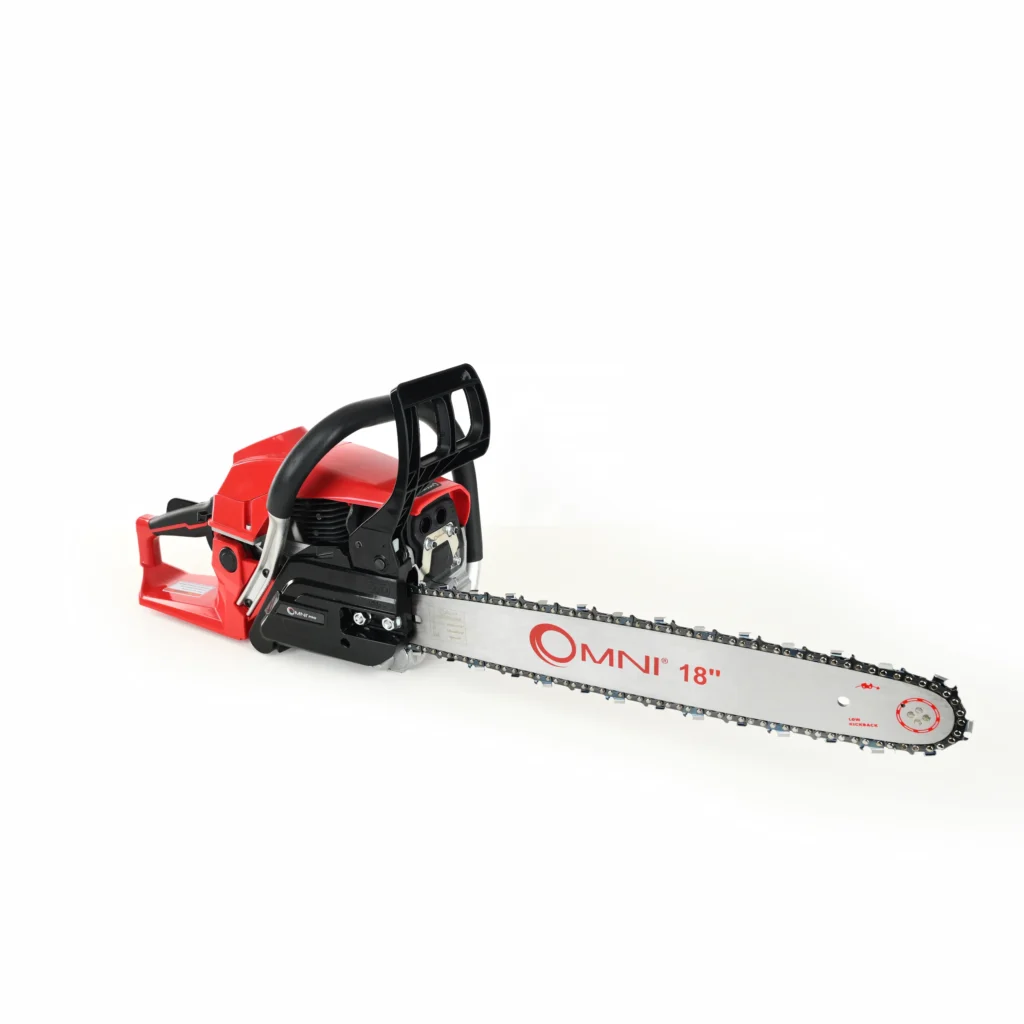
An 18-inch bar gives you more cutting reach while still remaining a fairly versatile configuration.
It can make sense for users handling a wider range of cutting jobs, provided the chainsaw’s power and manufacturer’s specifications support the setup.
22-Inch Chainsaw
A 22-inch bar is intended for larger cutting applications where additional bar length is useful.
But this is not a case of “bigger is always better.”
If your regular work involves smaller branches, carrying and manoeuvring a larger saw can become unnecessary.
Don’t Forget the Chain
Choosing a bar isn’t just about the bar.
The guide bar, saw chain and sprocket need to be compatible.
For example, Omni’s own 18-inch and 22-inch ripping chains are listed with a 0.325-inch pitch and 0.058-inch gauge. Omni also carries Oregon saw chains in several pitch and gauge configurations.
STIHL likewise explains that the guide bar groove must match the chain’s drive-link gauge, and the pitch of the bar, chain and sprocket must be compatible.
So if you’re replacing a bar or chain, don’t buy based on length alone.
Check:
- Bar length
- Chain pitch
- Chain gauge
- Drive-link count
- Sprocket compatibility
- Chainsaw manufacturer’s specifications
So, Should You Choose a Longer Bar?
Only if your work requires it and your chainsaw is designed to handle it.
A longer chainsaw bar can give you more cutting reach and make larger cutting jobs possible. But it doesn’t automatically give the machine more power.
The better approach is simple:
Choose the chainsaw according to the job. Choose the bar according to the saw and the material you need to cut.
If you’re mainly cutting smaller branches, a shorter bar may be easier to control. If you’re regularly working with larger timber, a compatible longer bar may make more sense.
The goal isn’t to own the longest bar you can find.
It’s to have the right combination of power, bar length and chain for the work in front of you.
Explore Chainsaws from Omni Green Solutions
Omni Green Solutions offers 12-inch, 18-inch and 22-inch chainsaw configurations, along with compatible saw chains and Oregon cutting components.
Choose the right length. Match the power. Let the job decide.