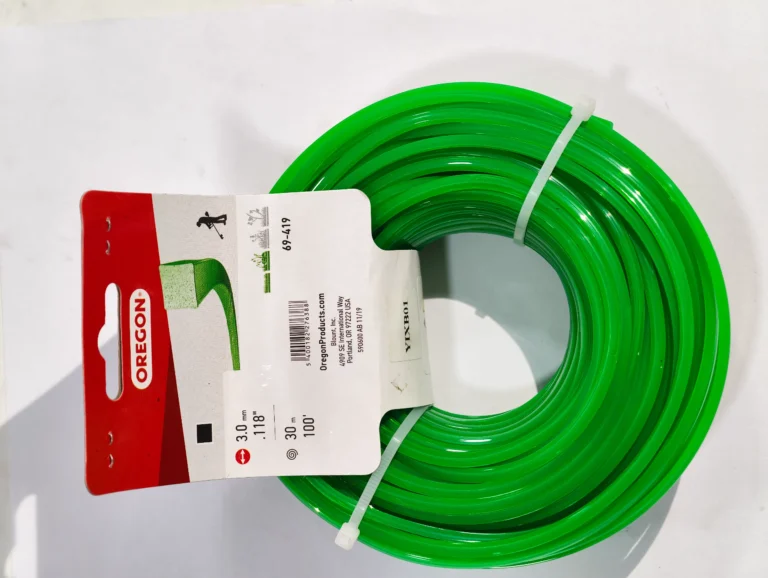
Choosing the right trimmer line can make a noticeable difference to cutting performance. A line that is too thin may wear out quickly when used on tougher vegetation, while a line that is too thick may not be suitable for your brush cutter or trimmer head.
So, how do you choose the right trimmer line thickness?
The answer depends on your brush cutter’s power, trimmer head compatibility, the type of vegetation you’re cutting and how frequently you use the machine.
Oregon offers trimmer lines in different diameters and profiles, including 2.0 mm, 2.7 mm and 3.0 mm options. Understanding where each size fits can help you select the right line for the job.
What Does Trimmer Line Thickness Mean?
Trimmer line thickness refers to the diameter of the cutting line, usually measured in millimetres (mm).
For example:
- 2.0 mm = thinner line
- 2.7 mm = medium/heavier-duty line
- 3.0 mm = thicker line
However, thicker doesn’t automatically mean better.
A thicker line generally requires more power to spin effectively. That’s why you should always check your brush cutter manufacturer’s recommended line diameter before choosing a replacement.
Why Does Trimmer Line Thickness Matter?
The right trimmer line thickness affects several things:
1. Cutting Performance
A thicker line can provide more durability when dealing with tougher grass and vegetation, provided your machine is designed to handle it.
2. Line Longevity
Thicker lines generally have more material and can withstand contact with vegetation and surfaces better than very thin lines.
3. Power Requirements
A thicker line creates more resistance as it rotates. A smaller or lower-powered machine may perform better with a thinner line.
4. Cutting Efficiency
The shape and material of the line also matter. Round, square, twisted and other profiles can behave differently during cutting.
So choosing the right trimmer line thickness isn’t simply about choosing the thickest option available.
2.0 mm Trimmer Line: For Lighter Cutting
A 2.0 mm trimmer line is a thinner option and can be suitable for lighter trimming applications, depending on the manufacturer’s specifications for your machine.
One Oregon option available through Omni Green Solutions is:
Oregon 20-118 – 2 mm Super Twist Platinum Gator Line
- Diameter: 2.0 mm
- Profile: Super Twist
- Packing: 1 lb donut
- Length: 126 metres
The twisted profile is designed for efficient cutting while providing a large amount of line in the package.
When should you consider 2.0 mm?
It can be appropriate for applications such as:
- Routine grass trimming
- Lawn edges
- Light vegetation
- Regular garden maintenance
Important: Always confirm that your trimmer head and machine are rated for 2.0 mm line.
2.7 mm Trimmer Line: A Versatile Mid-Range Option
If you regularly deal with thicker grass or tougher vegetation, 2.7 mm trimmer line can be a useful step up from thinner line.
Oregon’s range includes several 2.7 mm Gator Line options:
22-305 – 2.7 mm Gator Line Magnum Round
- Profile: Round
- Diameter: 2.7 mm
- Packing: 1 lb donut
- Length: 70 metres
22-405 – 2.7 mm Gator Line Magnum Square
- Profile: Square
- Diameter: 2.7 mm
- Packing: 1 lb donut
- Length: 57 metres
22-005 – 2.7 mm Gator Line Magnum Square
- Profile: Square
- Diameter: 2.7 mm
- Packing: 5 lb spool
- Length: 273 metres
22-505 – 2.7 mm Gator Line Magnum Round
- Profile: Round
- Diameter: 2.7 mm
- Packing: 5 lb spool
- Length: 364 metres
The 2.7 mm range gives users a choice not only in trimmer line thickness, but also in line profile and packaging size.
3.0 mm Trimmer Line: For More Demanding Applications
A 3.0 mm trimmer line is thicker and is generally intended for machines capable of handling heavier line.
Oregon options available through Omni Green Solutions include:
69-369 – 3.0 mm Round Trimmer Line
- Diameter: 3.0 mm
- Profile: Round
- Packing: 30 metres
- Packaging: Green hanger
69-419 – 3.0 mm Square Trimmer Line
- Diameter: 3.0 mm
- Profile: Square
- Packing: 30 metres
- Packaging: Green hanger
A 3.0 mm line may be useful for tougher vegetation, but do not assume that every brush cutter can accommodate it. Your machine and trimmer head must be compatible with the diameter.
Round vs Square Trimmer Line: Does Shape Matter?
Yes.
Two lines can have the same trimmer line thickness but different profiles.
For example, Oregon offers both 2.7 mm round and 2.7 mm square Gator Line.
Round Line
Round line is a common choice for general trimming and tends to provide consistent performance across routine applications.
Square Line
Square line has edges that can provide a more aggressive cutting action on vegetation.
However, the best profile depends on the application, machine and cutting head.
So don’t choose a line based only on diameter. Consider both thickness and profile.
Trimmer Line Thickness Guide
Here’s a simple way to understand the Oregon options shown in the Omni Green Solutions range:
| Line Thickness | Oregon Example | Profile | Typical Consideration |
| 2.0 mm | 20-118 | Super Twist | Lighter trimming applications |
| 2.7 mm | 22-305 | Round | General/heavier trimming |
| 2.7 mm | 22-405 | Square | More aggressive cutting profile |
| 2.7 mm | 22-005 | Square | Heavy-use spool option |
| 2.7 mm | 22-505 | Round | Heavy-use spool option |
| 3.0 mm | 69-369 | Round | More demanding applications |
| 3.0 mm | 69-419 | Square | More demanding applications |
These are application considerations, not universal compatibility ratings. Always follow the brush cutter or trimmer manufacturer’s specified line diameter.
How to Choose the Right Trimmer Line Thickness
Before buying replacement line, check these four things.
1. Check Your Brush Cutter Manual
This should be your first step.
The manufacturer will generally specify the acceptable line diameter and sometimes the recommended line profile.
2. Consider Your Vegetation
Ask yourself what you’re cutting most often.
Soft grass and lawn edges?
A thinner line may be sufficient.
Thicker grass and weeds?
A medium-diameter line such as 2.7 mm may be more appropriate if your machine supports it.
Tougher vegetation?
A 3.0 mm line may be an option for compatible, sufficiently powerful equipment.
3. Check the Trimmer Head
The cutting head must be designed to accommodate the diameter you’re planning to use.
Even if a thicker line seems more durable, forcing an incompatible line into the head can affect performance and potentially damage equipment.
4. Consider How Much You Use Your Brush Cutter
If you’re a professional landscaper or frequently maintain large properties, buying a larger spool can make more sense.
For example, Oregon’s 2.7 mm Gator Line is available in both 1 lb donut and 5 lb spool formats.
This gives professional users an option to purchase more line at once for regular maintenance work.
Does Thicker Trimmer Line Last Longer?
Not necessarily.
A thicker line can offer greater durability in appropriate applications, but its actual service life depends on:
- Type of vegetation
- Cutting technique
- Contact with hard surfaces
- Brush cutter power
- Line profile
- Trimmer head
- Operating conditions
Using a line that is unnecessarily thick can also reduce cutting efficiency if the machine isn’t designed for it.
The goal isn’t to find the thickest trimmer line—it’s to find the right trimmer line for your machine and application.
Common Mistakes When Choosing Trimmer Line
Choosing the thickest line available
More thickness doesn’t automatically mean better performance.
Ignoring machine compatibility
Always check the manufacturer’s recommended diameter.
Looking only at diameter
Two 2.7 mm lines can have different profiles and cutting characteristics.
Buying too little line
Frequent users may benefit from larger spool options.
Using worn or damaged line
Old or damaged line can affect cutting performance and may break more frequently.
So, Which Trimmer Line Should You Choose?
The right trimmer line thickness depends on the combination of machine + vegetation + cutting application.
Choose 2.0 mm when:
You have a compatible machine and primarily perform lighter trimming and lawn maintenance.
Consider 2.7 mm when:
You need a more substantial line for regular grass and tougher vegetation and your brush cutter supports it.
Consider 3.0 mm when:
You’re working with more demanding vegetation and have a sufficiently powerful, compatible brush cutter.
And remember: diameter isn’t the only decision. The line’s profile—round, square or twisted—can also influence how it performs.
Find the Right Oregon Trimmer Line
Omni Green Solutions offers a range of Oregon trimmer lines, including 2.0 mm, 2.7 mm and 3.0 mm options in different profiles and spool sizes.
Before choosing, check your brush cutter’s specifications and select a line that matches the manufacturer’s recommended diameter.
The right trimmer line doesn’t just fit your machine—it fits the job you’re doing.